How Many Stitches After a Dental Implant? Healing Timeline & Care Guide
How Many Stitches Do You Need After Dental Implant Surgery?
When preparing for a dental implant procedure, it is completely natural to wonder about the specifics of the surgery and recovery process. Patients frequently ask our clinical team: how many stitches after dental implant placement will I actually need?
Because every smile and surgical site is unique, dentists and oral surgeons do not give a single, uniform answer. The exact number of stitches, medically referred to as sutures, depends heavily on the location of the missing tooth, the condition of your underlying jawbone, and whether open-flap or minimally invasive surgical techniques are used.
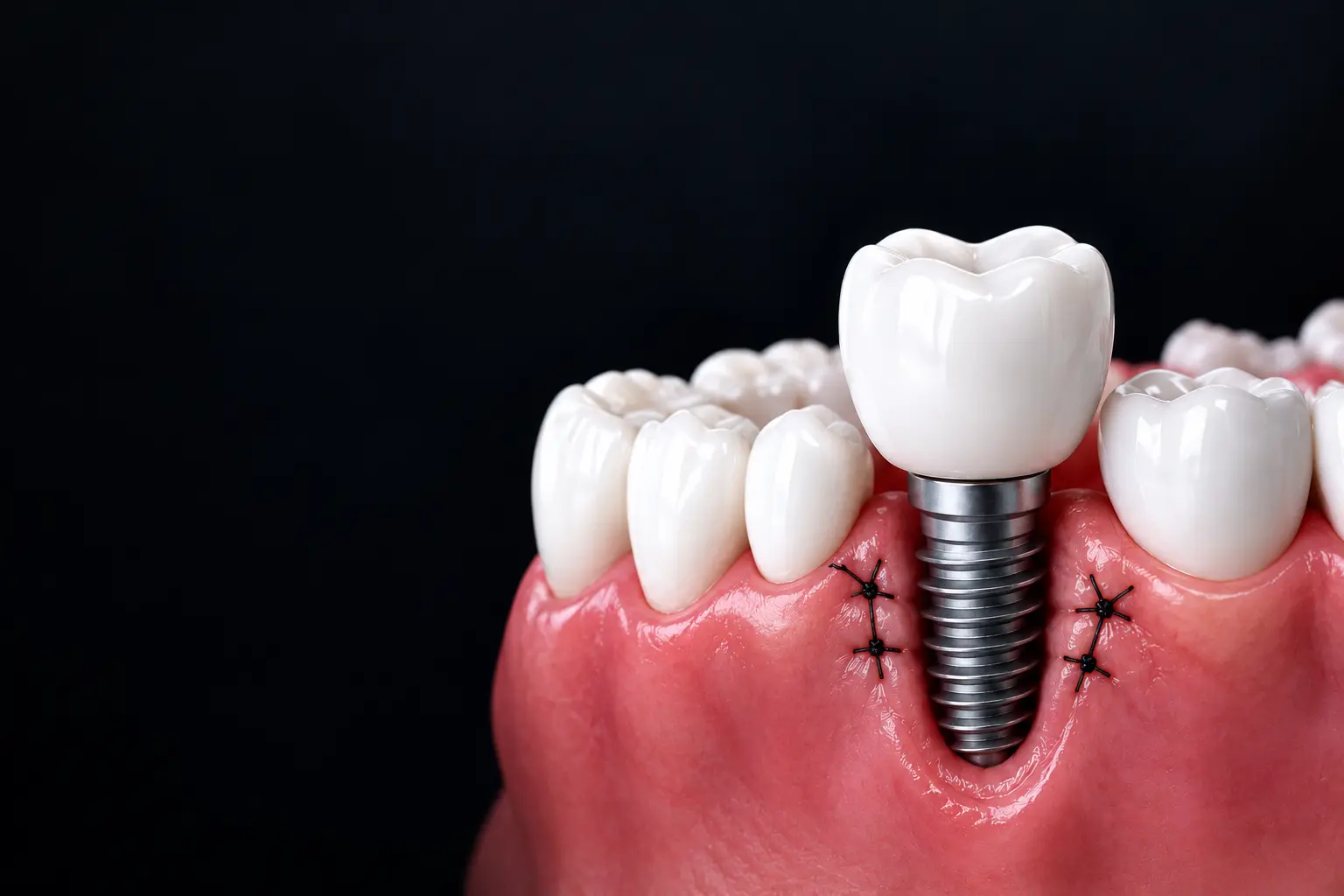
Understanding what dental implants are called and how the procedure works can help relieve anxiety. A dental implant is a biocompatible titanium or zirconia screw surgically anchored into the jawbone to replace a natural tooth root. To place this fixture securely, the surrounding gum tissue must often be opened, reshaped, and sutured closed.
The total suture count varies based on the scope of your implant treatment:
Single Tooth & Molar Teeth Implant Stitches (2 to 4 Sutures)
Replacing a single missing tooth with a standard endosteal implant or placing a dedicated molar teeth implant usually involves a small, localized incision. In these standard single-site procedures, dentists typically place 2 to 4 stitches to neatly secure the gum tissue around the healing abutment. .
Full Mouth Dental Implants & Full Arch Restorations (8 to 15+ Sutures)
If you are undergoing full arch reconstruction,such as full mouth dental implants or a complete full mouth replacement,the incision spans a much wider area along the gum ridge. To ensure proper tissue reattachment across the entire jawline, oral surgeons generally place 8 to 15+ stitches per arch.
Flapless vs. Open-Flap Implant Treatment
The surgical technique selected during your treatment planning directly dictates stitch requirements:
- Open Flap Technique: The surgeon creates a traditional incision in the gum flap to expose the underlying jawbone. This conventional approach requires sutures (typically 2 to 4 per tooth site) to hold the tissue together while healing.
- Flapless / Punch Technique: When 3D CBCT imaging reveals ample bone density, surgeons can make a tiny circular entry point directly through the tissue without reflecting the gum back. This technique requires 0 stitches.
Same-Day Options: Teeth Removal, Grafting & One-Day Implants
Many patients wonder: How do full dental implants work when combined with extractions, and how can dental implants be done in one day?
When performing simultaneous teeth removal and implants, the surgeon extracts the non-restorable tooth, places the implant screw directly into the fresh socket, and often packs bone grafting material into the surrounding gaps. In these cases, 3 to 6 stitches are placed over a protective membrane to hold the graft material in place and prevent infection.
For candidates qualifying for same day extraction and immediate placement of a dental implant with the immediate load of a temporary crown or , or full arch dental implants and immediate load, temporary crowns are placed onto the implants right after the surgery on the same day. . Even in accelerated same-day protocols, sutures remain vital for stabilizing the soft tissue around the temporary restorations while initial osseointegration (bone fusing) begins.
Types of Dental Stitches: Dissolvable vs. Non Dissolvable
According to clinical suture guidelines published by the American Dental Association (ADA) and research in the Journal of Oral and Maxillofacial Surgery, dental sutures fall into two primary categories:
- Dissolvable (Resorbable) Sutures: Made from natural collagen or synthetic materials like polyglactin, these sutures break down naturally when exposed to enzymes and moisture in your saliva. They usually disintegrate or loosen within 7 to 14 days.
- Non-Dissolvable (Non-Resorbable) Sutures: Made from silk, nylon, or expanded polytetrafluoroethylene (PTFE), these sutures provide tensile strength for extensive ridge augmentations or bone grafts. They remain intact until your dentist gently removes them during a quick post-op appointment 10 to 14 days after surgery.
Proper Post-Op Implant Care & Healing Timeline
Proper post-operative implant care is essential to prevent complications like peri-implantitis or tissue dehiscence (premature opening of the surgical site).
Essential Implant Care & Hygiene Instructions
- First 24 Hours: Avoid forceful spitting, rinsing, or drinking through straws, as pressure changes can dislodge blood clots and stress your stitches.
- Warm Salt Water Rinses: Starting 24 hours after surgery, gently swirl warm salt water (1/2 teaspoon salt in 8 oz water) 3 to 4 times daily to keep the suture line clean.
- Soft Diet: Stick to soft foods (yogurt, scrambled eggs, smoothies, mashed potatoes) for the first 5 to 7 days. Avoid chewing sharp, crunchy, or hot foods directly over the stitch line.
- Gentle Oral Hygiene: Continue brushing your remaining teeth, but avoid touching the suture line with your toothbrush bristles for the first week.
Every Hudson Dental Co. implant patient also receives a complimentary StellaLife Oral Recovery Kit, featuring a peppermint rinse, sublingual spray, and topical gel. Patients can start using it three days before their procedure and continue afterwards for fast, natural relief until fully comfortable.
Long-Term Effects and Health Benefits of Dental Implants
Following your dentist’s care instructions ensures positive long term effects of dental implants. Unlike traditional dentures or bridges, implants stimulate the surrounding jawbone, preventing natural bone resorption, preserving your facial structure, and providing stability for decades.
Frequently Asked Questions (FAQs)
How long do stitches stay in after a dental implant?
Dissolvable stitches typically fall out or dissolve within 7 to 14 days. Non-dissolvable stitches are manually removed by your dentist at a follow-up visit approximately 10 to 14 days after your surgery.
What should I do if a stitch comes loose early?
If a stitch unties or falls out after day 3 or 4 and you experience no bleeding or gaping open tissue, it is usually safe. However, if a suture unravels within the first 24 to 48 hours, contact your dental team to ensure the graft site remains properly closed.
Is it painful to have dental implant stitches removed?
No. Removing non-dissolvable stitches takes only a couple of minutes and causes minimal sensation. Your dentist simply snips the thread and gently pulls it out, which requires no local anesthetic.
Can you get a dental implant done in one day without stitches?
Yes, if you have sufficient existing jawbone density and are a candidate for flapless implant surgery, a one day tooth implant can be placed with minimal tissue displacement and zero stitches.
Ready to Restore Your Smile in Pleasantville, NY?
If you live in Westchester County and are considering implant treatment, expert local care is right around the corner. Located conveniently in central Westchester at 60 Wheeler Ave, Pleasantville, NY 10570, just blocks from the Pleasantville Metro-North station, the Jacob Burns Film Center, and minutes from Pace University, Hudson Dental Co. offers comprehensive implant evaluations tailored to your needs.
Whether you need a single molar tooth implant or want to explore full mouth dental implants, Dr. Kallianpur and our compassionate team ensure a comfortable procedure and smooth recovery.
Have questions about suture care or implant recovery? Contact us today or book online to schedule your consultation at Hudson Dental Co.