Understanding Dental Implant Cost: Prices, Financing & What to Expect

Dr. Kallianpur
Key Takeaways
A single dental implant without insurance typically ranges from $2,800 to $5,600, according to Delta Dental’s national benchmark data. However, your exact fee depends on your treatment plan. Because every mouth is different, a complete quote should account for the implant post, abutment, custom crown, and any preparatory care like bone grafting. Reviewing an itemized treatment plan alongside your insurance benefits and financing options is the clearest way to compare your true out-of-pocket investment.
How Much Do Dental Implants Cost?
When you start researching dental implant costs, you want a realistic ballpark before you ever sit in a dental chair. According to benchmark data, replacing a single tooth with an implant typically ranges from $2,800 to $5,600 without dental benefits.
Treat that range as a national reference point rather than a flat menu price. Dental implants are customized medical devices, so your actual estimate in Pleasantville depends on how many teeth you are replacing, the health of your jawbone, and the type of final restoration you choose. At Hudson Dental Co., we’re also able to make your treatment fee fit comfortably into most budgets with the flexible financing options we offer.
Single-Tooth Implant Pricing: What The Number Includes
If you are looking up how much a tooth implant is, make sure you know whether a quoted fee covers the entire restoration or just the surgical post. According to Mayo Clinic, a complete single-tooth implant replacement works in three distinct parts:
- The implant post: A screwlike metal post placed into the jawbone to replace the missing tooth root.
- The abutment: The connector piece attached to the implant post after healing.
- The crown: The custom artificial tooth secured to the abutment so it looks and functions like a natural tooth.
An unusually low tooth implant cost advertised online often covers only the implant post itself, leaving the abutment and final crown as separate charges.
Implant Dentures and Full-Arch Treatments
Replacing several teeth or a full arch changes how treatment is planned and priced. Mayo Clinic notes that implant-supported replacement teeth can be either removable (snapping onto implants for stability) or fixed (permanently screwed or cemented onto multiple implants).
Because those designs require different numbers of implants, lab materials, and chair time, a single-tooth price multiplied by the number of missing teeth will never give you an accurate full-mouth estimate.
What Does a Dental Implant Quote Include?
A transparent dental office will walk you through every phase of care before treatment begins. Understanding the building blocks of a dental implant treatment can help you read any estimate with confidence.
Implant, Abutment, and Final Restoration
Standard dental implants prices generally combine three core clinical elements: surgical placement of the implant into the jawbone, the supporting connector structure, and the final replacement crown or bridge. Always ask for those three fees to be clearly listed on your treatment plan so you can see the full restorative cost upfront.
Ask Whether Imaging, Preparatory Care, and Follow-Up Are Included
Depending on how long a tooth has been missing, your jaw may need preparation before an implant can be placed. Mayo Clinic explains that implant planning and surgery can involve several additional steps:
- Comprehensive dental exams and 3D imaging: Dental X-rays and 3D scans allow your dentist to evaluate bone volume and map precise placement.
- Tooth extraction: Removing a damaged or failing tooth before replacing it.
- Jawbone grafting: Transplanting a small amount of bone material when the jawbone isn't thick or strong enough to support an implant on its own.
- Temporary teeth and healing checks: Interim restorations and post-op visits while the jawbone fuses around the implant.
Not every patient needs an extraction or bone graft, which is why two patients getting a single implant can receive very different quotes.
How to Compare Dental Implant Prices
When comparing dental implants prices between offices, focus on clinical completeness rather than the lowest headline number.
Match the Restoration Type and Scope of Treatment
Patients searching for affordable denture implants often see wide price swings because two offices are quoting completely different procedures. One quote may be for a removable overdenture supported by two implants, while another covers a fixed full-arch bridge anchored by four or more implants.
Before comparing totals, confirm that both treatment plans specify:
- The exact number of implants being placed
- Whether the final teeth are removable or fixed
- Whether bone grafting, extractions, and 3D scans are bundled or billed separately
Request An Itemized Total, Not Just A Starting Price
To avoid surprise bills mid-treatment, ask five straightforward questions during your consultation:
- Does this estimate include the surgical post, the abutment, and the final crown or denture?
- Are diagnostic 3D scans, extractions, and bone grafts included if I need them?
- Will I need a temporary tooth during healing, and is it part of this fee?
- How are payments staged across the surgical and restorative phases?
- What happens if my treatment plan needs an adjustment once healing is underway?
How to Plan for Insurance and Financing
Once you have an itemized treatment plan, you can map out what dental benefits will cover and how to spread out any remaining balance.
Ask Your Insurer What Your Specific Plan Covers
According to Cleveland Clinic, dental insurance typically groups procedures into preventive, basic, and major care, with major restorative treatments like crowns, implants, and oral surgery often covered at around 50% of the contracted fee, subject to your plan's rules. However, some plans exclude implants as elective procedures, while others apply deductibles, waiting periods, or annual maximum limits.
Ask your dental team to submit a pre-treatment estimate to your insurer before scheduling surgery. As Cleveland Clinic points out, a pre-treatment estimate isn't a guarantee of payment, but it shows how your plan calculates your deductible, co-insurance, and remaining annual maximum so you can budget accurately.
Compare Financing by APR, Term, Fees, and Total Repayment
Because implant treatment happens in stages over several months, many patients pair their insurance benefits with flexible payment plans. At Hudson Dental Co., patients can explore third-party financing through Cherry and Proceed Finance on our Payment Plans page, or review broader budgeting strategies in our guide on how to get dental care without insurance.
When evaluating any payment plan, look past the monthly installment alone:
- Check the APR and whether promotional zero-interest terms apply to your qualification tier
- Confirm the repayment term length and any origination or late fees
- Compare the total repayment amount so you know the exact cost of financing your care
Frequently Asked Questions
How much is a dental implant?
Replacing a single tooth generally falls within the $2,800 to $5,600 national uninsured range reported by Delta Dental, provided the quote includes all three components: the surgical implant post, the connector abutment, and the custom porcelain crown. When comparing single-tooth estimates, always ask whether diagnostic 3D imaging, tooth removal, or bone grafting are included so you are comparing complete, start-to-finish treatment costs rather than surgery alone.
Does dental insurance cover implants?
Some dental insurance plans help cover dental implants under major restorative benefits, while others classify implants as elective and exclude them. Even when implants are covered, deductibles, waiting periods, network rules, and annual benefit maximums may still apply. Requesting a pre-treatment estimate from your insurer before surgery gives you a clear breakdown of your expected out-of-pocket share.
How much do implant dentures cost?
Implant denture pricing varies widely based on whether you choose a removable snap-in overdenture or a permanently fixed full-arch bridge, as well as how many implants are needed to anchor the restoration. Preparatory extractions, bone contouring, and temporary healing dentures also influence the total fee. The best way to compare quotes is to ask for an itemized single-arch or dual-arch treatment plan after a clinical exam.
How much does a full set of dental implants cost?
A full set of dental implants is priced by arch design rather than multiplying a single-tooth fee by 28 teeth. Most full-mouth plans use a strategic number of implants to support a full-arch fixed bridge or removable denture on the upper, lower, or both jaws. Your total estimate will reflect diagnostic imaging, any needed extractions or grafting, temporary teeth during healing, and the final custom arch restoration.
How much does a dental implant cost without insurance?
Without dental insurance, you pay the office’s full fee for each phase of care, which Delta Dental claims it averages $2,800 and $5,600 nationally for a single tooth (post, abutment, and crown). Your exact out-of-pocket total depends on whether you also need 3D imaging, an extraction, or a bone graft. To keep treatment manageable without coverage, ask for an itemized self-pay estimate upfront and explore HSA/FSA funds or monthly financing through Cherry or Proceed Finance.
Understand Your Dental Implant Costs Before You Decide
Planning for a dental implant should feel clear and pressure-free. At Hudson Dental Co., Dr. Rahul Kallianpur walks you through your clinical options, explains every line of your itemized treatment plan, and helps you review insurance benefits or flexible financing before you commit to care. We proudly welcome patients from Pleasantville, NY, and neighboring Westchester communities including Briarcliff Manor, Chappaqua, and Thornwood.
Contact us today or book online to schedule your consultation at Hudson Dental Co.
About The Doctor
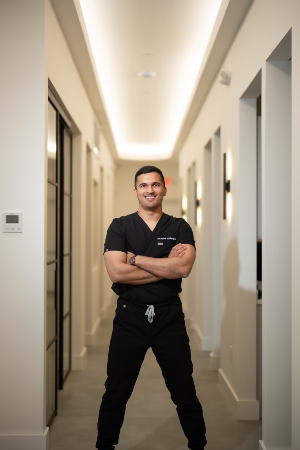
Dr. Kallianpur
Dr. Rahul Kallianpur grew up in Niskayuna, NY, and pursued dentistry driven by his passion for biology. After graduating from NYU, he completed a residency and advanced training in cosmetic dentistry. As the founder of Hudson Dental Co., he combines clinical expertise, artistic vision, and modern digital dentistry to create beautiful, confidence-boosting smiles in a welcoming environment.
Outside the office, he enjoys spending time with his family, cooking, traveling, playing soccer, and discovering music.